
Home Inspection Reveals Major Issues?
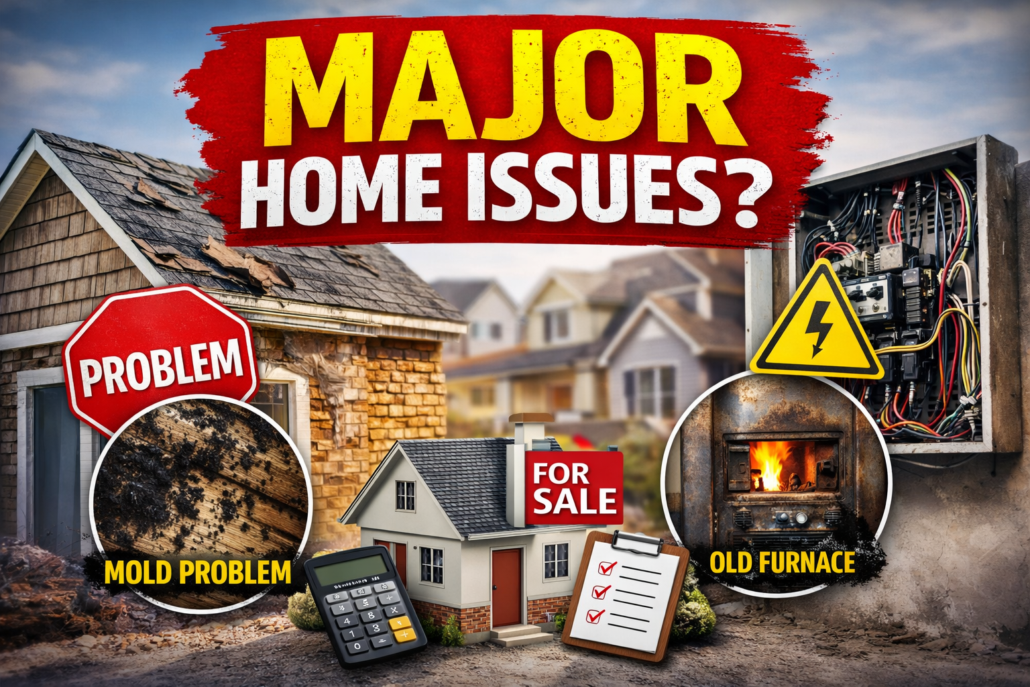
For many buyers, the most nerve-racking part of purchasing a home is the professional home inspection. People often worry that the inspector will uncover something serious that could ruin the deal. But the reality is this: major issues are not uncommon, and discovering them early can actually save you from expensive surprises down the road.
After performing many inspections and working with buyers during this stage of the process, I’ve seen firsthand how inspections uncover important information—and how buyers can use that information to make smarter decisions.
The Most Common Major Issues Found During Inspections
In my experience, there are three areas that buyers tend to focus on the most during a home inspection:
- Roof condition
- Furnace or heating system
- Electrical system
These are typically the biggest concerns because they are often the most expensive items to repair or replace after purchasing a home.
When buyers discover a problem with one of these systems, their first reaction is usually concern about the cost. But inspections don’t just reveal problems—they also give buyers leverage to negotiate.
Knowing the condition of these major systems can help buyers decide whether to ask the seller for repairs or negotiate a better price.
A Real Example From One of My Inspections
One inspection that stands out happened during the winter when the roof of the home was completely covered in snow.
The seller had stated there were no issues with the roof, but during my inspection I climbed into the attic to check the structure from the inside.
That’s where the real story showed up.
Inside the attic I found clear signs that the roof had been leaking for quite some time. There was black mold visible on the wood, and the insulation had been compressed and showed signs that it had been wet repeatedly over time.
Since the snow made it impossible to see the roof from the outside, the attic inspection was the only way to detect the issue.
I took photos and showed them to both the buyer and the real estate agent. Obviously, this was something that hadn’t been expected.
Because the issue was discovered during the inspection, the buyer was able to renegotiate with the seller. The options became clear:
- The seller could repair the roof before closing, or
- The buyer could negotiate a price reduction based on the cost of the repair.
After getting a quote from a reputable contractor, the buyer had the information needed to move forward confidently.
What I Recommend Buyers Do When a Major Issue Is Found
When I discover a major issue during an inspection, the first thing I do is show the buyer exactly what I’m seeing. If they can’t see it directly, I provide clear photos in my professional report so they fully understand the situation.
From there, I explain how serious the issue is and what it could mean for the home.
At that point, the buyer has a few options.
Often the next step is to bring in a certified contractor to look at the issue and provide a repair quote. Having a professional estimate makes it much easier to decide what to do next.
Sometimes the buyer may decide they are comfortable fixing the issue themselves. In that case, they might negotiate the price of the home to allow for the cost of materials and the time required to make the repairs.
Other times, the buyer may ask the seller to handle the repairs before closing.
Every situation is different, but the key is making decisions based on real information rather than assumptions.
Mistakes Buyers Sometimes Make After an Inspection
Over the years, I’ve seen buyers make a couple of common mistakes when major issues come up.
One mistake is ignoring the issue completely or assuming it isn’t a big deal. Sometimes people believe they can fix the problem over time but never get a proper quote to understand the true cost.
On the other side of the spectrum, some buyers walk away from a home too quickly. Many people walk away from a home just because of high energy costs because of poor or old insulation. This is an easy and sometimes a inexpensive fix.


Leave a Reply
Want to join the discussion?Feel free to contribute!