
11 Critical Red Flags in Home Inspections
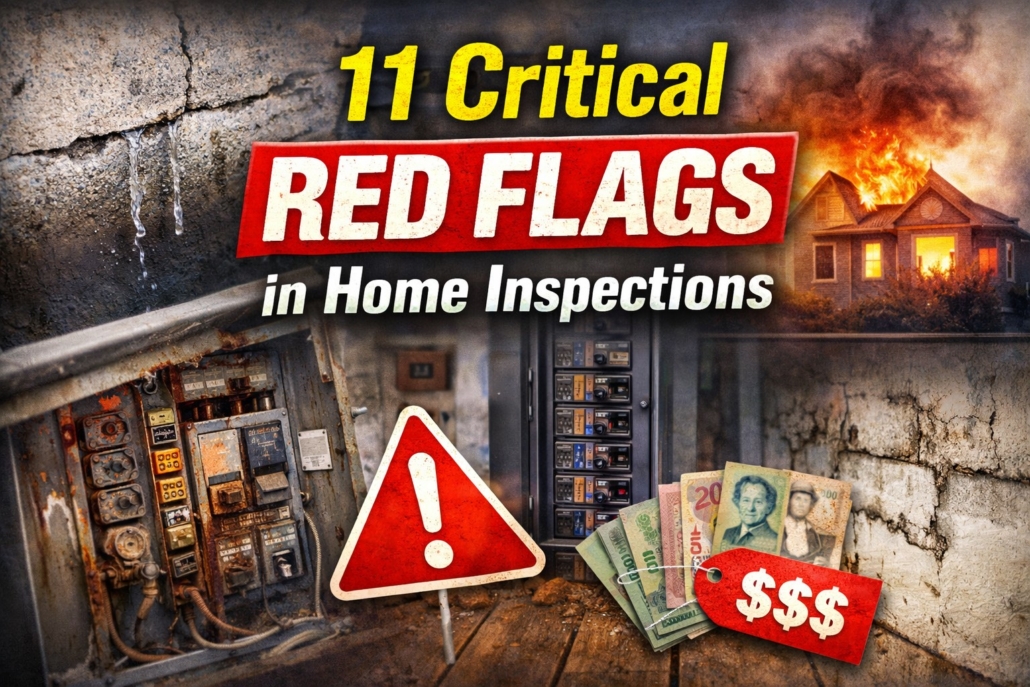
11 Critical Red Flags in Home Inspections
The most critical red flags to watch for during your home inspection include horizontal foundation cracks, water staining patterns, electrical panel issues, HVAC ventilation problems, and seemingly minor maintenance neglect that signals bigger issues. These warning signs can save you thousands in unexpected repairs and protect your family’s safety.
After many inspections, I’ve seen how buyers misread or completely miss the warning signs that matter most. Here’s what you need to know.
Foundation and Structural Red Flags
Horizontal foundation cracks are serious business.** Unlike vertical cracks that often indicate normal settling, horizontal cracks signal hydrostatic pressure pushing against your foundation from outside soil.
I inspected an older detached home where horizontal basement crack with slight wall bowing—about 1.5 inches was found. It was recommended a structural engineer evaluation, but the buyers felt it was “minor cosmetic” and skipped the follow-up.
The next year, the wall bowing worsened to over two inches, water intrusion began during heavy rains, and doors started sticking from structural shifting. The final repair bill ended up being very expensive for strapping, excavation, and waterproofing.
**Watch for sloping floors too.** They often indicate foundation settlement, structural beam problems, or support issues that will only get worse over time.
## Water and Moisture Issues
Water is the number one enemy of homes. Minor grading issues around your foundation create major headaches later.
**Watch for these moisture patterns:**
– Soil sloping toward the house instead of away
– Downspouts dumping water directly beside the foundation
– Water staining on basement walls or around windows
– Erosion lines or pooling near exterior walls
Poor drainage leads to foundation movement, basement leaks, and mold problems. Even subtle negative grading channels water exactly where you don’t want it—against your foundation walls.
**Early mold signs include musty odors, discolored patches on walls or ceilings, and moisture condensation in areas that should stay dry.**
## Electrical Warning Signs You Can’t Ignore
Outdated wiring systems top my list of electrical red flags that surprise buyers. Many older homes still have knob-and-tube wiring or aluminum wiring that creates fire hazards.
**Immediate concerns include:**
– Warm outlets or cover plates
– Flickering lights when appliances turn on
– Panel boxes with rust, scorch marks, or that feel warm to touch
These electrical issues often hide bigger problems with your home’s power capacity and safety systems.
## HVAC System Red Flags
Old heating systems create carbon monoxide risks, especially in homes with poor maintenance records. But here’s what most buyers miss: overly tight or sealed homes without proper ventilation.
I see this constantly—new windows and sealed envelopes for energy efficiency, but no HRV, ERV, or ventilation upgrades. Modern improvements without airflow planning create trapped moisture, condensation, and poor indoor air quality.
**Signs of HVAC problems:**
– Heating systems over 20 years old
– No ventilation system in recently renovated homes
– Ductwork with obvious damage or poor connections
## The Hidden Danger of ‘Minor’ Maintenance Issues
Small problems indicate bigger neglect. I inspected a home where gutters looked like basic maintenance—packed with leaves, clogged downspouts, water staining on fascia.
The buyer saw “spend an afternoon cleaning them out.” They closed in late summer without addressing it.
By spring, the real damage was clear. Rotted fascia boards, roof edge deterioration from ice damming, basement moisture, and early-stage mold behind baseboards. The following items had to be replaced.
– Gutter replacement and guards:
– Fascia and soffit repair:
– Roof edge repair:
– Interior moisture remediation:
If gutters were ignored, what else wasn’t maintained?
## Pest and Safety Red Flags
Termite damage and wood-destroying insects leave telltale signs— dry rot, hollow-sounding wood, and small holes with sawdust piles. These problems compound quickly in Canada’s climate cycles.
**Safety issues include:**
– Missing handrails on stairs
– Asbestos in older homes (particularly insulation and tiles)
– Lead paint in pre-1978 construction
These aren’t just code violations—they’re daily safety risks for your family.
## Common Mistakes When Interpreting Inspection Results
The biggest mistake buyers make is thinking inspectors can see everything. Home inspections are visual and non-invasive. We can’t open walls, move heavy furniture, or access every hidden space.
“If it’s not in the report, it doesn’t exist” creates dangerous overconfidence. Some of the biggest issues stay hidden during standard inspections—and that’s completely normal. When evaluating what red flags should I look for in a home inspection, remember that inspections identify visible problems and potential concerns, not every issue that might exist.
## How to Prioritize Red Flags and Take Action
Use this simple rule when evaluating home inspection reveals major issues :
**Can it hurt someone?** → Fix immediately or negotiate repair
**Can it destroy the house?** → Take very seriously
**Will it cost a lot soon?** → Budget for repairs and negotiate
**Is it annoying but harmless?** → Let it go
Safety issues come first—carbon monoxide risks, electrical hazards, structural instability. Structural problems need immediate attention because they worsen over time and affect everything else.
## Take Action Before Problems Become Expensive
Understanding what red flags should I look for in a home inspection protects you from costly surprises after closing. The inspection process isn’t about finding perfect homes—it’s about making informed decisions with accurate information.
Don’t skip recommended follow-ups from specialists. When structural engineers, electricians, or HVAC technicians get recommended, there’s usually a good reason. Learn more about how much a home inspection costs in Manitoba costs in Manitoba and get the thorough professional inspection that identifies these red flags before they become expensive problems.
Remember its better to walk away from a problem house than inherit someone else’s deferred maintenance. My job is giving you the information to make that choice confidently.
Ready to protect your investment? Contact Us for a comprehensive home inspection that identifies critical issues before you buy.


Leave a Reply
Want to join the discussion?Feel free to contribute!